
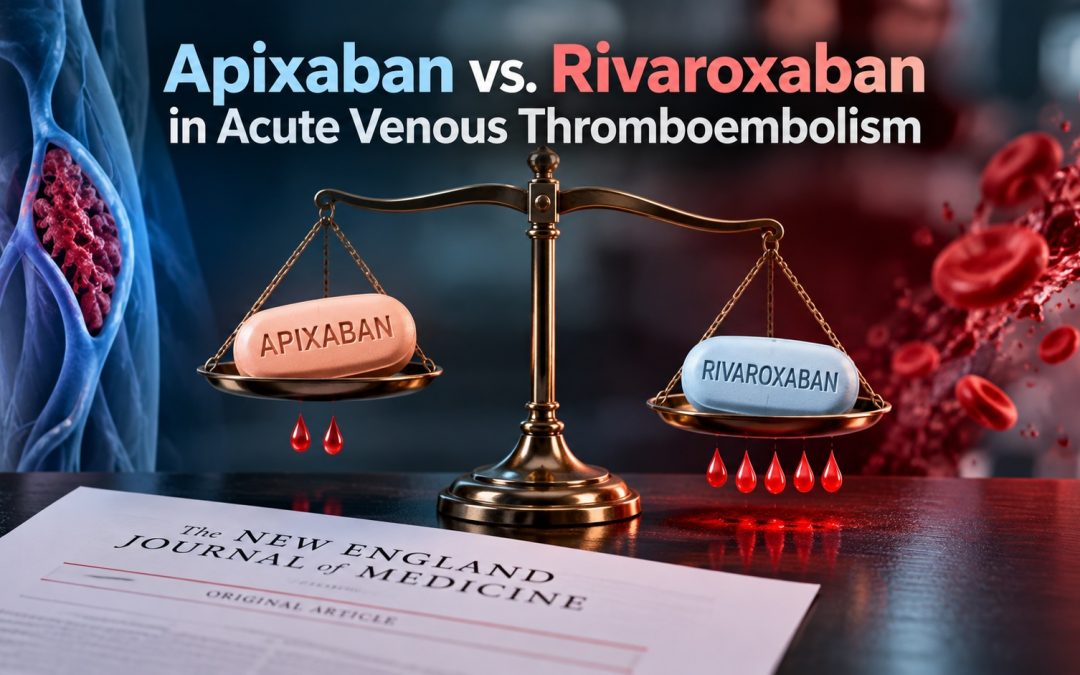
Bleeding Risk with Apixaban vs. Rivaroxaban in Acute Venous Thromboembolism (Therapy)
Castellucci LA, et al. N Engl J Med. 2026 Mar 12;394(11):1051-1060. doi: 10.1056/NEJMoa2510703.
Editorial: Bleeding Risk with Apixaban vs. Rivaroxaban in Acute Venous Thromboembolism.
Adnan N, et al. N Engl J Med. 2026 Jun 11;394(22):2276-2277. doi: 10.1056/NEJMc2604760.
Methodology: 4/5
Usefulness: 4.5/5
Question and Methods: Authors evaluated whether apixaban is superior to rivaroxaban regarding 3-month bleeding risk in adult acute VTE using an open-label, blinded-endpoint randomized controlled trial.
Findings: Apixaban was found to have significantly reduced clinically relevant bleeding compared to rivaroxaban (3.3% vs. 7.1%; RR 0.46) with similarly low rates of recurrent VTE (~1%).
Limitations: open-label design, exclusion of patients >120 kg or with active cancer, and lack of long-term follow-up beyond 3 months – unclear whether this risk of bleeding is persistent after the initial introduction of anticoagulation.
Interpretation: apixaban should be chosen over rivaroxaban when initiating a DOAC from the ED for acute VTE treatment to minimize bleeding risk.
