
A Randomized Trial of Tenecteplase in Acute Central Retinal Artery Occlusion
Ryan SJ, et al. N Engl J Med. 2026 Jan 29;394(5):442-450. doi: 10.1056/NEJMoa2508515.
Editorial: Seeing It Through – Lessons from a Retinal Stroke Trial.
Schrag M, et al. N Engl J Med. 2026 Jan 29;394(5):511-512. doi: 10.1056/NEJMe2514614.
Methodology: 4/5
Usefulness: 3/5
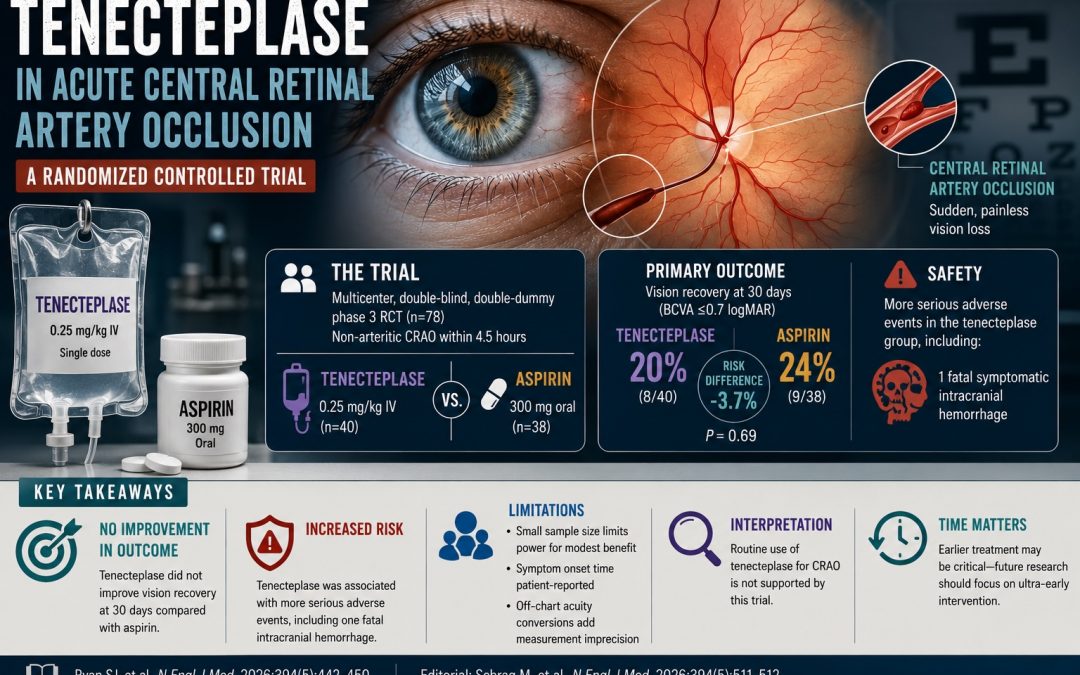
Question and Methods: This was a Multicenter, double-blind, double-dummy phase 3 RCT (n=78) comparing IV tenecteplase 0.25 mg/kg vs oral aspirin 300 mg within 4.5 hours in non-arteritic CRAO.
Findings: Vision recovery at 30 days (BCVA ≤0.7 logMAR): 20% (8/40) tenecteplase vs 24% (9/38) aspirin; risk difference −3.7%, P=0.69.
Limitations: Small sample size limits power for modest benefit; symptom onset time was patient-reported, and off-chart acuity conversions add measurement imprecision.
Interpretation: Tenecteplase did not improve recovery vs aspirin and had more serious adverse events, including one fatal symptomatic intracranial hemorrhage; routine use not supported.