
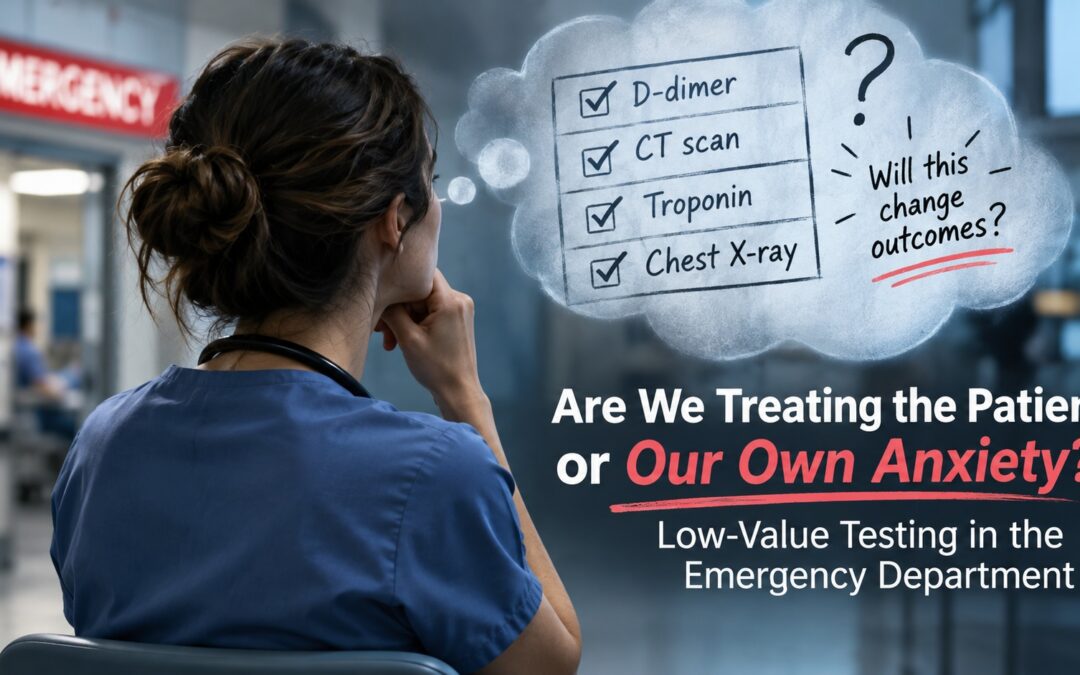
Emergency medicine is defined by uncertainty. But when uncertainty becomes a reflex to test, test, and test again, we may be doing more harm than good with low value testing.
I want to tell you about two emergency physicians. Same hospital. Same patient: a 28-year-old with pleuritic chest pain, no PE risk factors, normal vitals, normal exam.
Clinician A examines the patient, reassures them, prescribes NSAIDs, and sends them home. Total time in the ED: 90 minutes.
Clinician B, seeing the same patient, orders a D-dimer, a troponin, a chest X-ray. The D-dimer comes back positive. A CTPE is ordered. The CT is negative for PE, but it shows a 2 mm lung nodule. Now the patient needs follow-up imaging in 3 months, possibly a specialist referral, and leaves the ED terrified they might have cancer. Total time in the ED: 6 hours.
Same patient. Same presentation. Completely different care. Both physicians were competent. Both cared deeply about their patients. Both thought they were doing the right thing.
So here’s the question: which emergency physician practiced better medicine? And maybe more importantly, which one are you?
Because many of us have been both.
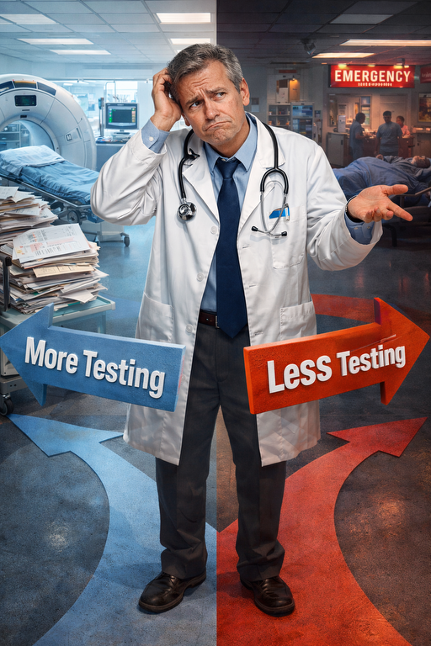
This post is about one of the most important and most uncomfortable questions in emergency medicine: the gap between what feels safe and what actually improves patient outcomes. We order tests reflexively, often not because we think the patient needs them, but because not ordering them makes us uncomfortable.
The framing question I want you to carry throughout is simple: “Does this practice meaningfully change patient outcomes?” If the answer is no, we need to ask ourselves why we’re still doing it.
In 2017, the Canadian Institute for Health Information and Choosing Wisely Canada published a landmark report evaluating unnecessary care across the country. Their finding was striking up to 30% of selected tests, treatments, and procedures in Canada are potentially unnecessary.[1,16] That figure doesn’t describe outliers. It describes us.
Why We Over-Test: The Psychology of Uncertainty
In emergency medicine, uncertainty is the norm. We see undifferentiated patients, we have incomplete information, and we make high-stakes decisions under time pressure. That uncertainty is uncomfortable, and when we’re uncomfortable, ordering a test feels like relief. It feels like doing something. It gives us a sense of control.
But many tests we order don’t reduce uncertainty in any meaningful way. They don’t change what we do for the patient. They just change how we feel.
A systematic review of 118 assessments across 35 studies found that diagnostic over-testing is widespread across healthcare settings, and that downstream cascades from low-value tests expose patients to unnecessary procedures, radiation, anxiety, and treatment of clinically insignificant findings.[2] More recent evidence adds a system-level dimension: low-value testing in the ED is directly associated with prolonged length of stay and access block, factors we know independently increase patient mortality.[3]
System-Level Drivers
Three system-level forces push us toward over-testing:
- Efficiency pressure. Front-loading investigations feels like smart workflow, even when results won’t change management.
- Cognitive load. In a crowded ED, ordering a test is faster than sitting with uncertainty. It’s the path of least resistance.
- Practice norms and “how we do things here” are powerful. Many of us noticed as residents that our testing behaviour shifted depending on which staff physician we were working with: same patient, different shift, different plan. That’s not evidence-based medicine. That’s culture-based medicine.[4]
Patient expectations also play a role, and this pressure is growing. Patients arrive with AI-generated lists of rare diagnoses and demands for specific tests. Addressing those expectations properly takes time, often more time than just ordering the test. But while patient expectations are real and growing, research shows they are a smaller driver than our own internal psychology.[4,5]
Individual Driver #1: Fear of Missing Something Catastrophic
On an individual level, the biggest driver is fear: fear of missing something rare but catastrophic. As one emergency physician put it in a qualitative study: “The fear of missing something is so great that it drives us to do an expensive test on a patient who doesn’t need it.”[4]
That fear is completely understandable. We’ve all had that case, or heard about that case, where someone missed something terrible and it stuck with us. But left unchecked, this fear leads us to test patients with such a low pre-test probability that a positive result is more likely to be a false positive than a true one. Is that making the patient safer? Or is it just making us feel safer?
Individual Driver #2: Discomfort with Uncertainty
Studies show that clinicians who are less tolerant of uncertainty order significantly more tests, even when those tests are unlikely to change management.[7] Ordering a test feels like control, even when it doesn’t improve outcomes. In contrast, not ordering a test, even when evidence supports that decision can feel like we’re leaving something on the table.
And the striking thing is: we know it. Qualitative and survey studies show EM physicians routinely order tests they believe are medically unnecessary. When asked why, they rarely say “the patient needed it.” They say: “I was worried.” “I didn’t want to miss something.” “I didn’t want to get in trouble.”[5,6] The challenge is learning to recognize when we’re managing our own discomfort and consciously choosing evidence-based care instead.
Your Risk Tolerance Drives Clinical Decisions Often More Than the Patient’s Risk
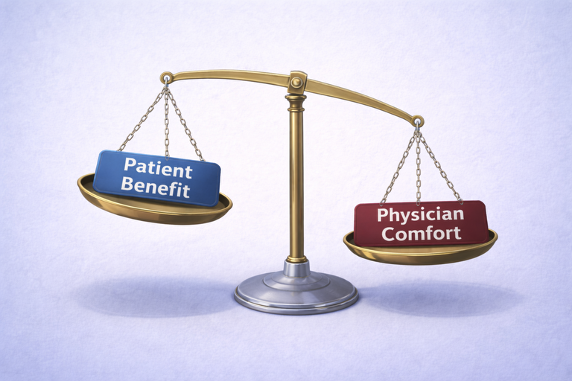
Multiple studies show that physician risk tolerance influences clinical decisions more strongly than patients’ objective risk factors. In a study by Cheng and colleagues, emergency physicians were assessed for risk tolerance, then observed managing patients with mild head injury. Risk-averse physicians ordered CT heads in 57% of cases; risk-tolerant physicians ordered CTs in only 37%; same patients, same risk profiles, vastly different testing rates, with no difference in outcomes.[8]
We see the same pattern with chest pain. Pines and colleagues found that risk-averse emergency physicians were significantly more likely to admit low-risk chest pain patients, without any improvement in patient outcomes.[9] And a JAMA Network Open study of over 711,000 Medicare inpatients found that hospitalists with higher specialty consultation rates had greater resource use and longer lengths of stay, with no difference in 30-day mortality or readmission rates.[11]
More intense practice reflects physician preference, not patient need, and it exposes patients to extra procedures and extra days in hospital without helping them.
These studies highlight an uncomfortable truth: we often frame testing decisions as patient-centred care, when in reality they’re about managing our own fear of uncertainty. That doesn’t make us bad physicians. It makes us human. But it does mean we need to be honest with ourselves about what’s driving our decisions.
Defensive Medicine Doesn’t Protect You; it Harms Patients
Many of us order low-value tests believing they protect us legally. There are two problems with this approach.
First: it’s bad medicine. Unnecessary testing causes real harm, which we’ll get to shortly. Second: it doesn’t reduce legal risk. The CMPA is clear on this: you can’t practice looking over your shoulder. Practising evidence-based medicine, with good documentation and shared decision-making, is the best medicolegal defence. Defensive medicine doesn’t protect you. It causes harm, contributes to burnout, and doesn’t lower your legal exposure. We should document our reasoning clearly and engage patients in shared decision-making when appropriate. For a deeper dive into defensive medicine, check out Dr. Zworth’s grand rounds on the blog.
Over-Testing is Not Harmless
We tend to think: if a test might help, how could it hurt? But the evidence is clear: low-value testing causes real harm, at both the patient and system level.[2,12]
Patient-Level Harms: Physical, Psychological, and Financial
Physically, unnecessary testing exposes patients to pain from IV access, cumulative radiation, medication side effects, and the downstream complications of procedures triggered by false positives. Psychologically, incidental findings, even clinically insignificant ones create lasting anxiety. The stress of waiting for results, undergoing follow-up tests, and living with diagnostic uncertainty can be profound.[17,18] Financially, patients and families bear costs in time, travel, and lost income, all without a corresponding benefit.
CT Imaging Carries Population-Level Cancer Risk
The individual risk from a single CT scan is small. But small risks multiplied across millions of scans become real harm at a population level. A 2025 modelling study in JAMA Internal Medicine projected that CT examinations performed in 2023 will result in approximately 103,000 future cancers, potentially accounting for 5% of all new cancer diagnoses annually.[15] That’s not a theoretical risk. That’s a consequence of how we practice, aggregated across a population.
Incidental Findings Create Cascades of Harm
One of the most under-recognized harms of over-testing is what happens after the scan, particularly with incidental findings, which occur in 20–40% of CT scans. A nationally representative survey of US internists found that 94% had experienced care cascades triggered by incidental findings that produced no clinically important outcome, yet caused harm to patients and physicians alike. In about one-third of those cascades, the original test that revealed the incidental finding was judged not clinically appropriate.[17,18]
A global review found similar patterns across low- and middle-income countries: overuse of testing was consistently associated with unnecessary procedures, radiation exposure, and treatment of clinically insignificant findings.[13,14] This isn’t just an ED problem. It’s a global pattern of preventable harm.
Over-Testing Worsens ED Crowding
The impact of over-testing extends beyond individual patients. Low-value testing consumes time, staff, imaging capacity, monitors, and beds. A low-risk chest pain patient awaiting an unnecessary chest X-ray may occupy a monitored bed for two extra hours; that monitor stays occupied, that space stays blocked. And we know from Canadian and international data that ED crowding and access block are independently associated with worse outcomes, including increased mortality.[3]
Over-testing isn’t just a quality problem. It’s a patient safety issue at the system level.
A Framework for Smarter Decisions: Pre-Test Probability
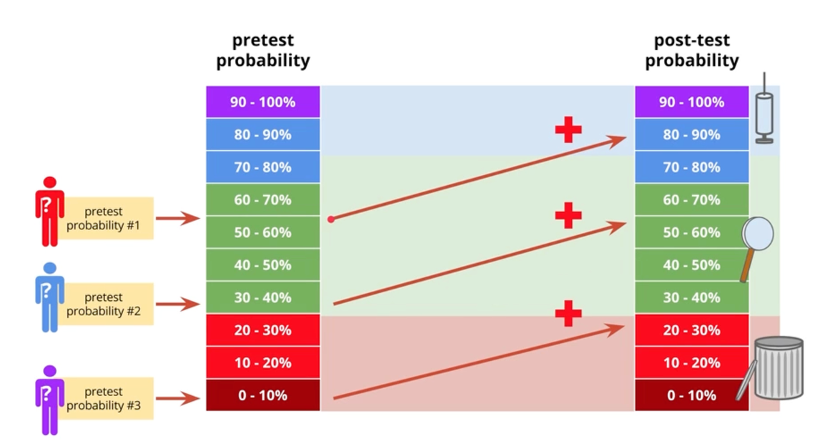
So if over-testing causes harm, the question becomes: how do we decide when a test actually helps? Every diagnostic test only makes sense in the context of pre-test probability. If the likelihood of disease is very low, a positive result is more likely to be a false positive than a true positive. This is Bayesian thinking, and in emergency medicine, it’s essential.
Tests are most useful in that middle zone of uncertainty, when we’re unsure and the result will actually change what we do. Take two examples:
A healthy 25-year-old with chest pain who is PERC-negative. A D-dimer here is more likely to produce a false positive than identify true disease, and you’ll end up chasing it with a CTPE that carries its own risks.
A 70-year-old with new unilateral headache, jaw claudication, and scalp tenderness. Your pre-test probability for GCA is sky-high; you’re treating regardless of inflammatory markers.
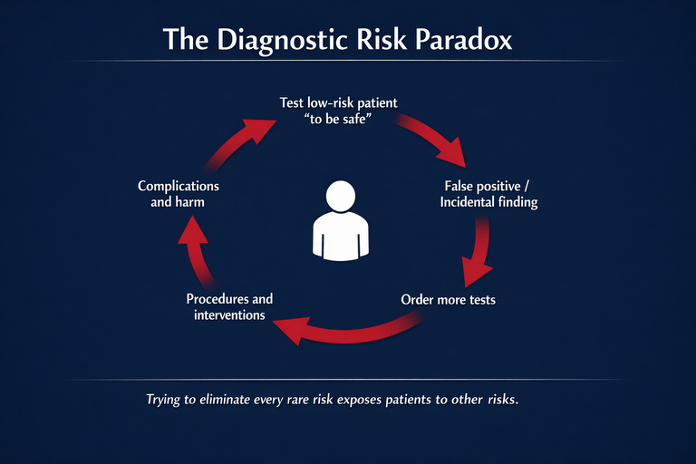
At both extremes, very low and very high probability, the test doesn’t add value. Ignoring this leads to what one paper calls the “diagnostic risk paradox”: in trying to eliminate every rare risk, we end up exposing patients to the very harms we sought to avoid.[19]
Availability Bias: Why We Overestimate Rare Diagnoses
Think about shark attacks. They kill about 5 people per year in the US, while heart disease kills 700,000. But which one do people fear more?
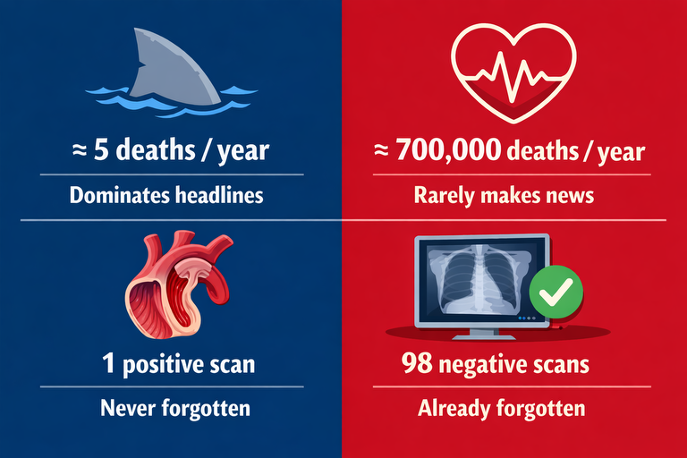
That’s availability bias: we remember vivid, dramatic events far more readily than ordinary ones. The same thing happens in emergency medicine. After diagnosing one case of PE, emergency physicians increase their PE testing rate by approximately 15% over the next 10 days.[20] One memorable case literally changes testing behaviour for hundreds of subsequent patients. Our clinical judgment becomes calibrated to what we fear missing, not to what is actually likely. That one unforgettable case shouldn’t reset your evidence-based threshold for everyone who follows.
Testing as a Cognitive Shortcut
Under pressure, testing becomes a shortcut for uncertainty. Instead of tolerating discomfort, we order the test. It feels efficient. It feels thorough. But often, it bypasses critical thinking.[10] We stop asking why we’re ordering a test and start ordering it simply because it’s available, because it’s what we always do, because it feels safer than doing nothing.
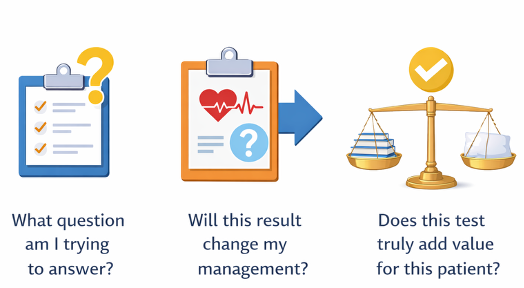
Before ordering that next test, try asking three questions:
- What question am I trying to answer?
- What will I do differently based on the result?
- Does this test actually add value for this patient?
Those three questions bring us back to deliberate, evidence-based care.
CT Head in Delirium: High Resource Use and Low Yield
We’ve looked at why we over-test, the harms it causes, and the importance of pre-test probability. Now it’s time to see how this plays out in practice and to examine specific habits that feel safe but may actually be doing harm.
An elderly patient comes in confused. Delirious. No history of trauma, no focal neurological deficits on exam. And you think: “Should I get a CT head? Well… better safe than sorry!” In Ontario, 23% of hospitalized patients with delirium receive a CT head, many of them unnecessarily. Why do we do this? Fear of missing something serious. Medicolegal concern. Occasionally family pressure. And honestly, often just because it’s what we’ve always done.
But the evidence shows routine CT in delirium has a surprisingly low yield and causes real harm.
Low Yield
In patients with delirium without trauma or focal neurological deficits, CT head yield is approximately 2.7%.[22] Scans are normal in more than 98% of patients whose delirium has an identified medical cause or who have pre-existing dementia.[22] In one retrospective ED study of 500 delirious patients, only 13 had acute findings on CT, and half of those patients had focal neurological deficits on exam.[23] In other words, the patients who actually had something on CT were the ones we would have scanned anyway based on clinical red flags.
The Harms
Beyond low yield, there are real harms. Delirious patients often become agitated during transport and scanning, requiring sedation or physical restraints, which can worsen the delirium and increases aspiration risk.[21] Some scans end up non-diagnostic due to patient motion, meaning the patient endured the experience with no benefit at all. At the system level, transport and scan time prolong ED length of stay, and every CT we order for a delirious patient without red flags diverts access from patients who actually need imaging.
When Should You Image?
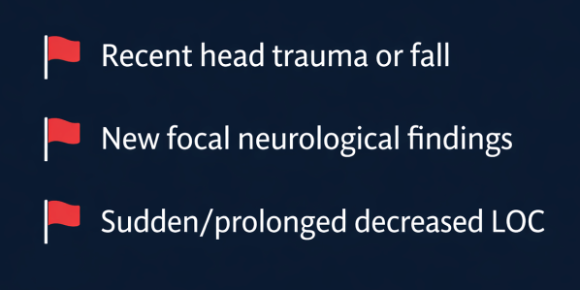
Choosing Wisely Canada recommends against routine CT head for delirium without risk factors. Reserve imaging for patients with recent head trauma, new focal neurological findings, or unexplained prolonged decreased level of consciousness.
Without red flags, focus on identifying and treating the underlying cause. Delirium is multifactorial and usually resolves with supportive care.[21] In this case, doing less is doing more for the patient. For a deeper dive into delirium, check out Dr. Singh’s grand rounds on the blog.
Blood Cultures in Non-Severe CAP
During a global blood culture bottle shortage, Canada received just 40% of its usual supply; yet the number of cultures ordered didn’t fall. Instead, some patients received one set instead of two or three, an approach our infectious disease colleagues caution against: if bacteremia is suspected, at least two sets should be drawn.
So why do we keep ordering them? Blood cultures became embedded in pneumonia bundles and, over time, became synonymous with good care. We order them out of habit, or fear of missing bacteremia or a resistant organism. But if we’re honest, we’re often ordering for reassurance, not because we expect the result to change management. Empiric antibiotics already cover the most likely pathogens.
Low Yield, Minimal Impact on Management
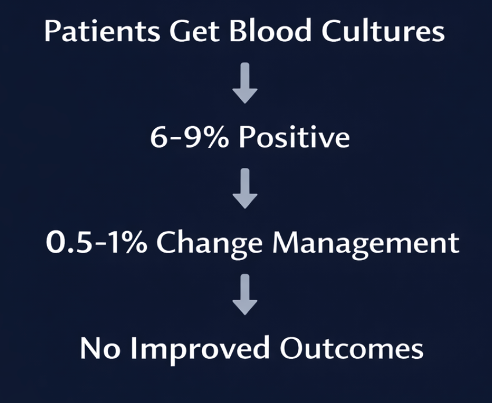
The data are clear. Across hospitalized cohorts, over 90% of blood cultures are negative. In non-severe pneumonia, true bacteremia is found in only about 6–9% of cases.[24] And even when cultures are positive, they almost never change management. Multiple studies show that antibiotic broadening occurs in fewer than 1% of patients, including ICU populations.[24] Blood cultures in non-severe CAP have not been shown to improve mortality, length of stay, or readmission rates.[24]
The hidden harms
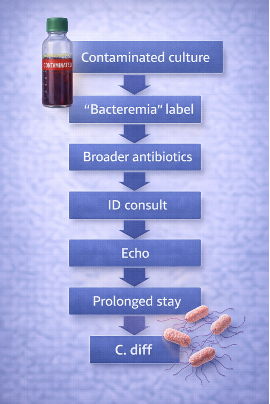
The most insidious harm isn’t a missed diagnosis; it’s a false positive. In many adult studies, 30–50% of positive blood cultures are contaminants.[24] A contaminated culture labels a patient as bacteremic and triggers a cascade: broader antibiotics, ID consults, echocardiography, repeat cultures, prolonged hospital stay. These patients end up with longer lengths of stay, higher costs, and increased antibiotic exposure with all its associated risks, including C. difficile, drug toxicity, and antimicrobial resistance. All of this in a population where routine cultures have not been shown to improve outcomes.[24]
When Should You Culture?
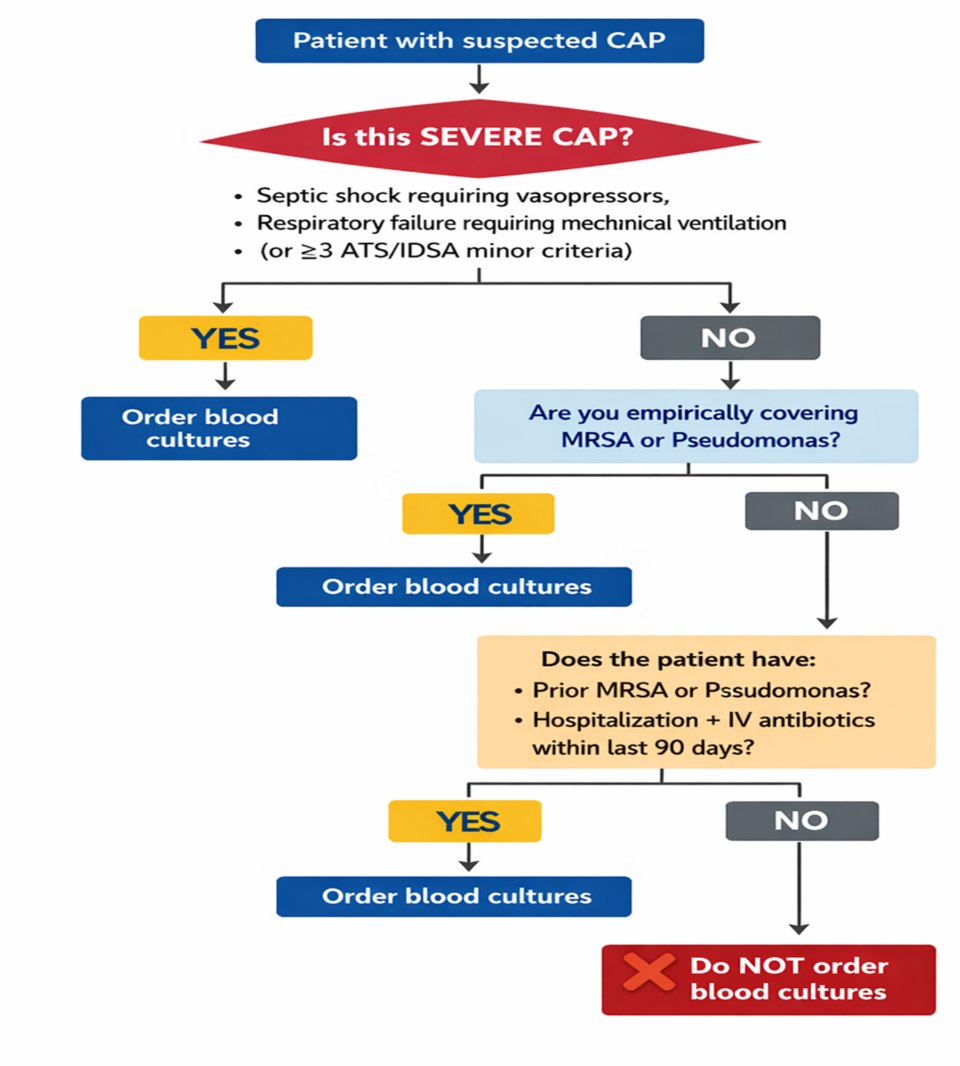
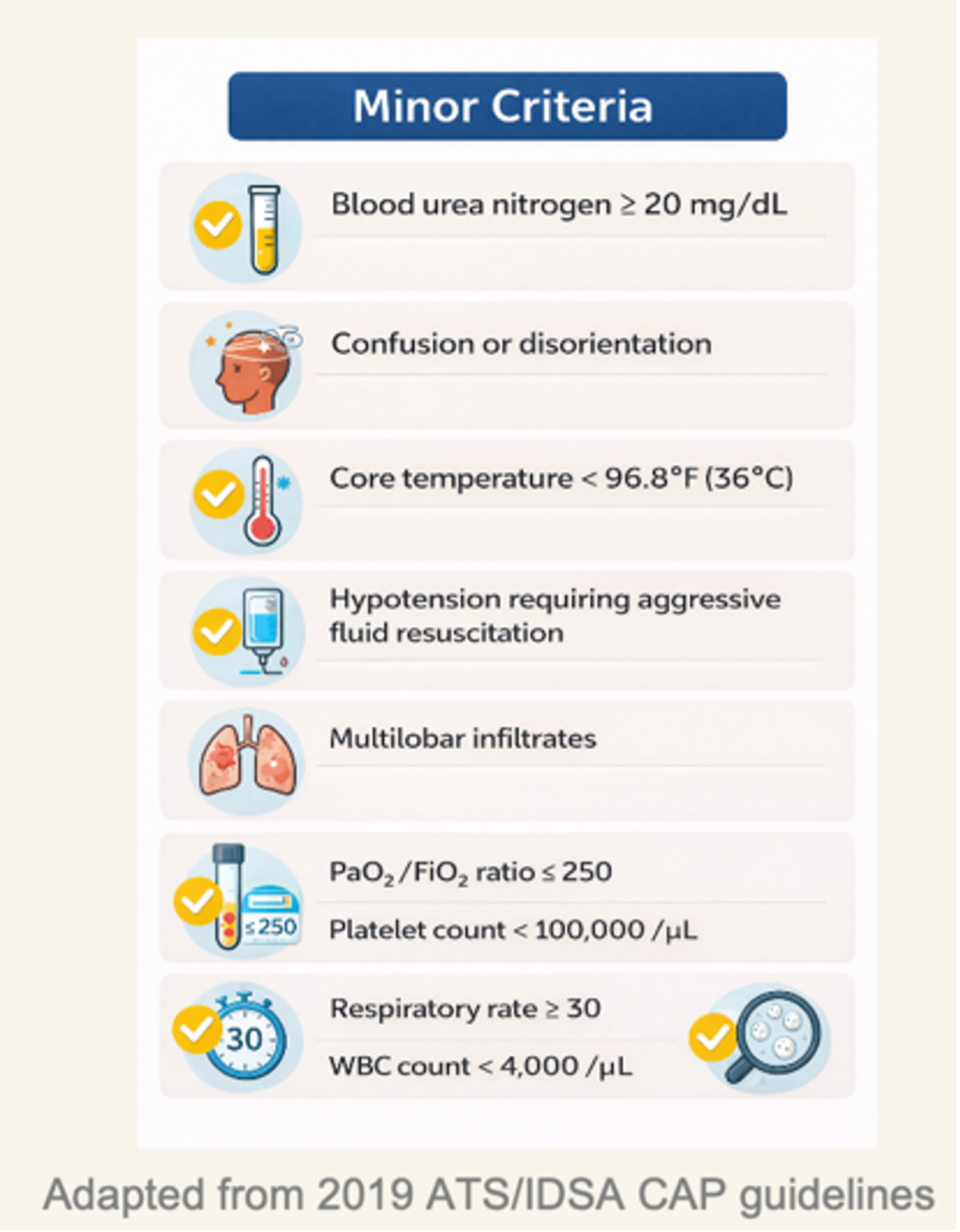
According to the 2019 ATS/IDSA guidelines, routine blood cultures are not recommended for most hospitalized patients with uncomplicated CAP.[24] Cultures are indicated in severe CAP, defined by septic shock requiring vasopressors, respiratory failure requiring mechanical ventilation, or three or more ATS/IDSA minor criteria, or when there are clear risk factors for bacteremia with resistant organisms such as prior MRSA or Pseudomonas, or recent hospitalization with IV antibiotics.
Every Test Should be Data Driven
Whether it’s a CT head or blood cultures, the framework is the same: before ordering a test, you should be able to clearly name the diagnosis you’re trying to rule out, identify the clinical features that make it plausible, and articulate what you would do differently based on the result.
“To reassure” is not enough. “Just to check” is not enough. Ordering a test to manage your own discomfort is not evidence-based medicine; it’s treating your anxiety at the patient’s expense.
Emergency medicine is not about eliminating uncertainty. It’s about managing uncertainty thoughtfully with evidence, clinical judgment, and intention. The goal is the best care for each patient, which sometimes means tolerating discomfort and choosing not to test.
Reducing unnecessary testing isn’t just about individual patient safety, it’s about what happens to the rest of the department.
Every unnecessary CT occupies a scanner slot that could have gone to a patient who actually needed it. Every bed held while we wait on a low-value result is a bed unavailable to someone sicker in the waiting room. Every hour spent chasing incidental findings is an hour not spent on patients who need our expertise.
Less low-value care means more capacity. When we anchor testing to pre-test probability, we free up time, attention, and resources for the patients who truly benefit. In a crowded emergency department, that’s not a small thing.
Challenge One “Safe-Feeling” Practice
Pick one practice from this post, or another low-value habit you recognize in your own practice and commit to questioning it on your next shift. Maybe it’s pausing before ordering that CT head in a delirious patient with no red flags. Maybe it’s skipping the blood cultures in your next uncomplicated CAP. Start with one.
Notice when you feel the pull to order the test. Recognize the discomfort. And then ask yourself: “Am I treating the patient? Or am I treating my own anxiety?”
This isn’t easy. It requires us to tolerate uncertainty, to push back against cultural norms, and to trust the evidence even when it feels uncomfortable. Recognizing that distinction is the first step toward real change. Not testing when testing causes harm is not negligence; it’s evidence-based medicine. And those small changes add up: for our patients, for our system, and for our own practice satisfaction.
“First, do no harm.” That doesn’t just mean choosing the right treatment. Sometimes it means choosing not to test at all.
I hope this post has given you a framework for questioning practices that feel safe but don’t improve outcomes. Emergency medicine is hard. Uncertainty is uncomfortable. Sometimes the most evidence-based decision we can make is to step back, trust our clinical assessment, and choose watchful waiting over reflexive testing.
References
- Canadian Institute for Health Information. Unnecessary care in Canada [Internet]. Ottawa (ON): CIHI; 2017 Apr. Available from: https://www.cihi.ca/sites/default/files/document/choosing-wisely-baseline-report-en-web.pdf
- Müskens JLJM, Kool RB, van Dulmen SA, Westert GP. Overuse of diagnostic testing in healthcare: a systematic review. BMJ Qual Saf. 2022 Jan;31(1):54-63.
- Walker H, West C, Lawton L, Emeto TI, Gangathimmaiah V. Could low-value diagnostic tests be compounding access block? A single-site cross-sectional study. Emerg Med Australas. 2025;37(4):e70100.
- Gangathimmaiah V, Evans R, Moodley N, Gupta TS, Carlisle K. Drivers of low-value diagnostic tests in emergency medicine practice: a qualitative descriptive study. Emerg Med J. 2025 Mar 4;emermed-214241.
- Kanzaria HK, Hoffman JR, Probst MA, Caloyeras JP, Berry SH, Brook RH. Emergency physician perceptions of medically unnecessary advanced diagnostic imaging. Acad Emerg Med. 2015 Mar;22(4):390–8.
- Alalshaikh A, Alyahya B, Almohawes M, et al. Emergency medicine physicians’ views on providing unnecessary management in the emergency department. Open Access Emerg Med. 2022;14:175–83.
- Begin AS, Hidrue MK, Lehrhoff S, et al. Association of self-reported primary care physician tolerance for uncertainty with variations in resource use and patient experience. JAMA Netw Open. 2022 Sep 1;5(9):e2229521.
- Cheng CY, Pan HY, Li CJ, et al. Physicians’ risk tolerance and head computed tomography use for pediatric patients with minor head injury. Pediatr Emerg Care. 2018 May 25;Publish Ahead of Print.
- Pines JM, Isserman JA, Szyld D, et al. The effect of physician risk tolerance and the presence of an observation unit on decision making for ED patients with chest pain. Am J Emerg Med. 2010 Sep;28(7):771–9.
- Lam JH, Pickles K, Stanaway FF, Bell KJL. Why clinicians overtest: development of a thematic framework. BMC Health Serv Res. 2020 Nov 4;20(1).
- Stevens JP, Hatfield LA, Nyweide DJ, Landon B. Association of variation in consultant use among hospitalist physicians with outcomes among Medicare beneficiaries. JAMA Netw Open. 2020 Feb 21;3(2):e1921750.
- Moynihan R, Doust J, Henry D. Preventing overdiagnosis: how to stop harming the healthy. BMJ. 2012 May 28;344:e3502.
- Brownlee S, Chalkidou K, Doust J, et al. Evidence for overuse of medical services around the world. Lancet. 2017 Jul;390(10090):156–68.
- Jenniskens K, de Groot JAH, Reitsma JB, Moons KGM, Hooft L, Naaktgeboren CA. Overdiagnosis across medical disciplines: a scoping review. BMJ Open. 2017 Dec;7(12):e018448.
- Smith-Bindman R, Chu PW, Firdaus HA, et al. Projected lifetime cancer risks from current computed tomography imaging. JAMA Intern Med. 2025 Apr 14;185(6).
- Koch C, Roberts K, Petruccelli C, Morgan DJ. The frequency of unnecessary testing in hospitalized patients. Am J Med. 2018 May;131(5):500-503.
- Davenport MS. Incidental findings and low-value care. AJR Am J Roentgenol. 2023 Jul;221(1):117-123.
- Ganguli I, Simpkin AL, Lupo C, et al. Cascades of care after incidental findings in a US national survey of physicians. JAMA Netw Open. 2019 Oct 2;2(10):e1913325.
- Chatterjee S. When caution becomes harm: understanding the psychology of over-investigation. Am J Med. 2025 Oct 15;S0002-9343(25)00699-0. Online ahead of print.
- Ly DP, Bhattacharya J, Landon BE. The influence of the availability heuristic on physician testing behavior: a large-scale study of pulmonary embolism test ordering. Soc Sci Med. 2022;301:114986.
- Inouye SK, Westendorp RGJ, Saczynski JS. Delirium in elderly people. Lancet. 2014 Mar 8;383(9920):911-22.
- Theisen-Toupal J, Breu AC, Mattison MLP, Arnaout R. Diagnostic yield of head computed tomography for the hospitalized medical patient with delirium. J Hosp Med. 2014 Aug;9(8):497-501.
- Butcher JD, Smith MC, Roberts L, Ellis B. Utility of head computed tomography for older adults with suspected delirium in the emergency department: a retrospective observational study. Acad Emerg Med. 2023 Jan;30(1):16-22.
- Fabre V, Sharara SL, Salinas AB, Carroll KC, Desai S, Cosgrove SE. Does this patient need blood cultures? A scoping review of indications for blood cultures in adult nonneutropenic inpatients. Clin Infect Dis. 2020;71(5):1339-1347.
- Metlay JP, Waterer GW, Long AC, et al. Diagnosis and treatment of adults with community-acquired pneumonia: an official clinical practice guideline of the ATS and IDSA. Am J Respir Crit Care Med. 2019 Oct 1;200(7):e45–67.