by Robert Suttie, Shahbaz Syed | Sep 10, 2020 | Featured, Grand Round Summaries, Infectious Disease
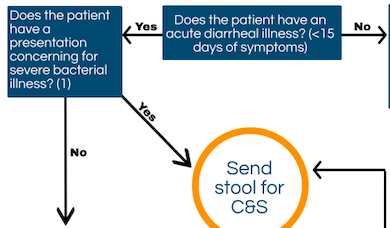
Does diarrhea run in your family? Ok, that one’s bad, we apologize. There is significant practice variation when it comes to acute diarrheal illness – fortunately, there are some recommendations to help guide our practices, and in particular, when we...

by Evelyn Tran, Pascale King | Jul 16, 2020 | Featured, Grand Round Summaries, Neurology
Status epilepticus (SE) is considered one of the most common neurological emergencies with an estimated incidence of 20 cases/100,000 people worldwide. Just the facts The distribution is bimodal, peaking in patients <1 and >60 years old. In children, the cause...

by Maeghan Fu, Pascale King | Jul 9, 2020 | Featured, Grand Round Summaries, Neurology
Migraine headaches are not a benign disease – they have a significant impact on quality of life, ability to function, and pose a considerable economic and societal burden. Prevalence tends to peak during peoples’ period of highest productivity. ...

by Nick Prudhomme | Jun 25, 2020 | Featured, Grand Round Summaries, OBGYN
Assisted reproductive technology (ART) is an evolving field with many therapies that have a common goal: to maximize the chance of pregnancy while minimizing the risk of multiple gestations. As the Canadian infertility rate approaches 15%, the use of ART is steadily...

by Shahbaz Syed | Jun 11, 2020 | Featured, Grand Round Summaries, Resuscitation, Toxicology
Here, we seek to explore some controversial, poorly known, or irrelevant drugs in medicine in a menagerie of drug cocktails. 1. What drugs best treat SVT? A patient presents with the following rhythm strip, they’re totally stable, on no medications and with no...

by Shahbaz Syed | Jun 11, 2020 | Featured, Grand Round Summaries, psychiatry
In the past 5-10 years we have seen a significant increase in mental health-related complaints in the Emergency Department (ED), and during COVID this is especially noticeable. Historically, we’ve classically been taught to focus on performing safety...

by Lindsay Cheskes, Kate O'Connell | May 21, 2020 | cardiac arrest, Cardiology, Critical Care, Featured, Grand Round Summaries, Resuscitation
This post takes a deep dive into the pathophysiology, presentation and management of electrical storm in the emergency department. The management focuses on patients with implantable cardioverter-defibrillators receiving multiple shocks, patients with polymorphic...
by Garrick Mok, Pascale King | May 7, 2020 | Critical Care, Featured, Grand Round Summaries, Infectious Disease, Resuscitation
The Surviving Sepsis Guidelines define sepsis as a “life-threatening organ dysfunction caused by a dysregulated host response to an infection”. Septic shock is further defined as sepsis with hypotension (MAP ≤65) and/or lactate ≥2.0 despite adequate fluid...

by Mark McKinney, Shahbaz Syed | Mar 12, 2020 | Featured, Grand Round Summaries, Resuscitation, Trauma
Here we present part two on our series on hypothermia. For more on the assessment, resuscitation, and management of the hypothermic patient, see part one. Prognostication of cardiac arrest in hypothermia Indicators of cardiac arrest before cooling (Brown 2012) Major...

by Mark McKinney, Shahbaz Syed | Mar 5, 2020 | Featured, Grand Round Summaries, Resuscitation, Trauma
Hypothermia results in slightly over one hundred deaths per year in Canada; typically as a result of primary hypothermia, frostbite and other cold exposure injuries (Toronto Public Health, 2014). In the United States, this is estimated at 1500 deaths annually...