

We are excited to introduce the Sixth edition of The Ottawa Handbook of Emergency Medicine. Your bedside guide for approaches to various Emergency Medicine presentations.
Highlights of the Sixth edition include the addition of: Oncologic emergencies, approach to the pregnant patient, geriatrics and more!
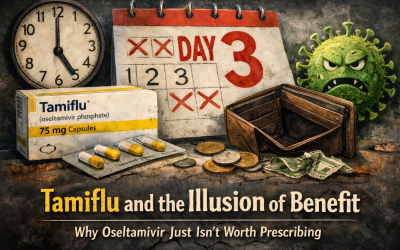
Tamiflu and the Illusion of Benefit
We're seeing a major uptick in influenza this season, and Oseltamivir (Tamiflu) continues to be prescribed widely during flu season, particularly during surges when Emergency Departments feel pressure to “do something.” Despite this, a careful examination of the...
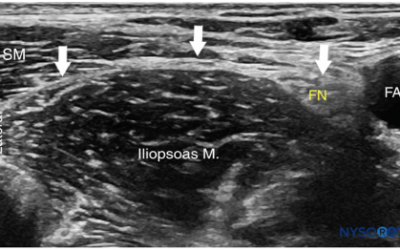
Hip Fractures and the Battle of the Blocks: SIFI vs IIFI
Hip fractures are a common emergency department presentation and, with an aging population, their incidence will continue to rise. These injuries are profoundly painful, and many patients experience moderate to severe pain for at least one month following fracture...

Intravenous Tenecteplase before Thrombectomy in Stroke
Methodology: 4/5 Usefulness: 4/5 Qiu Z, et al. N Engl J Med. 2025 Jul 10;393(2):139-150. doi: 10.1056/NEJMoa2503867. Question and Methods: This multi-center, open-label RCT of 550 patients in China with acute ischemic stroke due to large vessel occlusion presenting...

PTM Journal Club: IV vs IO Management in OHCA
At this month's Journal Club, we explored the use of IV vs IO access established during out-of-hospital cardiac arrests (OHCAs). In particular we took a deep dive into two trials: IVIO trial versus PARAMEDIC-3 trial Background Establishing vascular access...
Magnesium Sulfate Versus Lidocaine as an Adjunct for Renal Colic in the Emergency Department: A Randomized, Double-Blind Controlled Trial
Methodology: 4/5 Usefulness: 3.5/5 Toumia M, et al. Ann Emerg Med. 2024 Dec;84(6):670-677. doi: 10.1016/j.annemergmed.2024.06.015. Question and Methods: This double-blinded RCT studied whether using adjuncts including MgSO4 and lidocaine are more effective than NSAID...

DEM Tri-Cycle Report
The DEM Tri-Cycle Report (2022–2024) is the Department of Emergency Medicine’s first comprehensive three-year departmental review highlighting resilience through pandemic challenges, major growth in research and education, and strong commitment to equity and wellness....

An ED approach to Abnormal Uterine Bleeding
Abnormal uterine bleeding is a common and often disruptive presentation in the Emergency Department, and it can range from a benign nuisance to a sign of significant pathology. This post aims to equip ED clinicians with a practical, patient-centered approach to...

A non-inferiority randomized controlled trial of a shorter acetylcysteine regimen for paracetamol overdose – the SARPO trial
Methodology: 3.5/5 Usefulness: 4/5 Isbister G, et al. J Hepatol. 2025 Oct;83(4):881-887. doi: 10.1016/j.jhep.2025.05.008. Question and Methods: This multicentre unblinded RCT with 204 patients assessed non-inferiority of a 12-hour NAC protocol for single non-massive...
Scanning Season: Ovarian PoCUS and Adnexal Masses
You’re on shift and a patient presents with pelvic pain. You suspect the ovaries may be involved, but the transvaginal probe isn’t available. Don’t worry — your transabdominal PoCUS skills can still get the job done. This month’s PoCUS Pearl covers:1️⃣ How to...
Not-so-Benign Hematology Part 2: Hemolytic Anemia & Thrombotic Microangiopathies
You can find Part 1 on Hemophilia here. For Part 2, we’ll be focusing on hemolytic anemias and thrombotic microangiopathies, or TMAs for short. Defined simply, hemolytic anemia is the destruction of red blood cells before their normal 120-day lifespan. It’s a broad...