

We are excited to introduce the Sixth edition of The Ottawa Handbook of Emergency Medicine. Your bedside guide for approaches to various Emergency Medicine presentations.
Highlights of the Sixth edition include the addition of: Oncologic emergencies, approach to the pregnant patient, geriatrics and more!
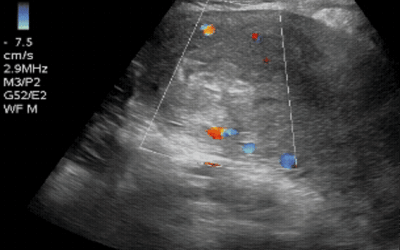
Diagnosing Retained Products of Conception with PoCUS
It's 2:30 AM. A 29-year-old woman presents ten days after a medical abortion. She's febrile, tachycardic, and complaining of worsening pelvic pain. She has a small amount of vaginal bleeding, and her abdomen is soft. Her β-hCG is still positive, which is expected....
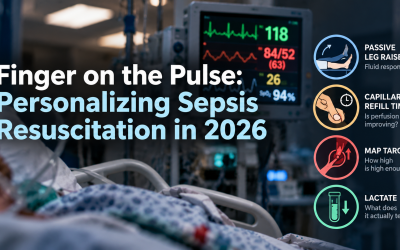
Finger on the Pulse: Personalizing Sepsis Resuscitation in 2026
Sepsis resuscitation has evolved considerably over the past two decades, moving away from rigid protocols toward more individualized care. Yet many familiar targets remain: 30 mL/kg of fluid, a MAP of 65, and lactate clearance. But not every patient benefits from more...
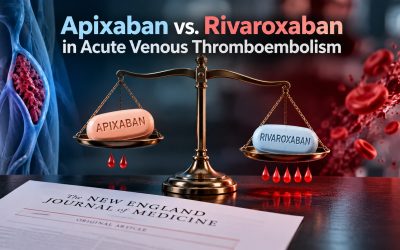
Bleeding Risk with Apixaban vs. Rivaroxaban in Acute Venous Thromboembolism
Bleeding Risk with Apixaban vs. Rivaroxaban in Acute Venous Thromboembolism (Therapy) Castellucci LA, et al. N Engl J Med. 2026 Mar 12;394(11):1051-1060. doi: 10.1056/NEJMoa2510703. Editorial: Bleeding Risk with Apixaban vs. Rivaroxaban in Acute Venous...
STI Cheat Sheet – 2026 Update
Here we present an updated STI “cheat sheet” for some of the infections and syndromes most commonly encountered in the Emergency Department: how they present, what to test, and what to treat. The following recommendations are based primarily on the current Public...
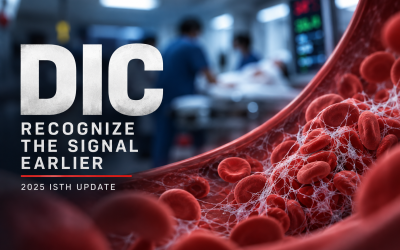
Decoding DIC
Disseminated intravascular coagulation (DIC) is an acquired, life-threatening disorder characterized by systemic activation of coagulation, dysregulated fibrinolysis, and, as emphasized in the updated definition, endothelial injury. It exists on a continuum, from...
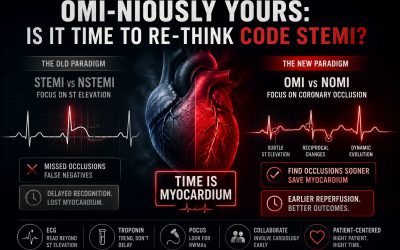
OMI-nously Yours: Is it time to re-think Code STEMI?
Cardiovascular disease remains one of the leading causes of death worldwide, accounting for approximately 32% of deaths globally.¹ Acute myocardial infarction (MI) accounts for more than 50,000 deaths annually in Canada.² As emergency physicians, we all recognize the...
Should we shock PEA/asystole? : A multicenter prospective study on Echo Visualization of Occult Ventricular Fibrillation in Out-of-Hospital Cardiac Arrest
Gaspari et al. Ann Emerg Med. 2025 Oct;86(4):328-336. doi: 10.1016/j.annemergmed.2025.04.014. Question: To identify the prevalence of non-shockable ECG rhythm but ventricular fibrillation (VF) by Echo in out-of-hospital cardiac arrest (OHCA). To determine the...
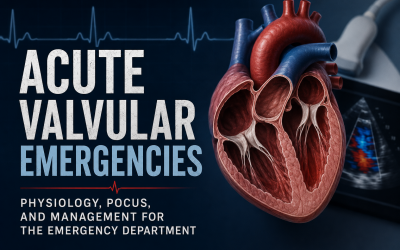
Acute Valvular Emergencies
Acute valvular emergencies are uncommon, but when they present they can rapidly become life-threatening. Patients often arrive with undifferentiated respiratory failure, pulmonary edema, hypotension, or cardiogenic shock, and the initial diagnosis may not be obvious....
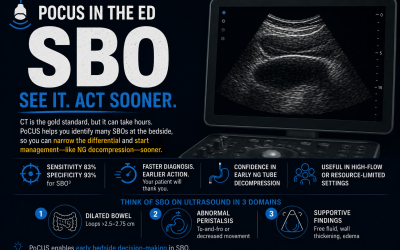
When the Gut Don’t Flow: PoCUS for SBO
Small bowel obstruction (SBO) is a common ED presentation, and these patients are often in significant pain with persistent nausea and vomiting. While CT remains the gold standard to confirm the diagnosis, identify the transition point, detect complications such as...
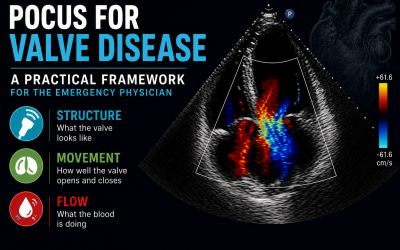
Pour Some Colour On Me: A Guide to PoCUS Valve Assessment
Valvular heart disease is everywhere in emergency medicine, but it is sneaky. We see the older patient with recurrent dyspnea whose chest radiograph is unremarkable and BNP is only mildly elevated. We see the patient in shock whose physiology never quite fits sepsis....