

We are excited to introduce the Sixth edition of The Ottawa Handbook of Emergency Medicine. Your bedside guide for approaches to various Emergency Medicine presentations.
Highlights of the Sixth edition include the addition of: Oncologic emergencies, approach to the pregnant patient, geriatrics and more!
Risk of Acute Kidney Injury After Intravenous Contrast Media Administration
Journal Club Summary Methodology Score: 4/5 Usefulness Score: 3.5/5 Hinson JS, et al. Ann Emerg Med. 2017 Jan 19 [Epub ahead of print] Full Article In this large, well-designed retrospective study of AKI following contrast administration for CT...
Pediatric Airway Management in the Emergency Department
Pediatric endotracheal intubation is an uncommon procedure in the Emergency Department (ED); even in high volume tertiary pediatric centres the incidence has been reported at 8-10/10,000 patients. While infrequent, pediatric airway management is...
Effect of Noninvasive Ventilation Delivered by Helmet vs. Facemask on the Rate of Endotracheal Intubation in Patients with Acute Respiratory Distress Syndrome
Summary Methodology Score: 4/5 Usefulness Score: 3.5/5 Patel BK, et al. JAMA. 2016 Jun 14;315(22):2435-41 Full Article Editorial: Unmasking a Role for Noninvasive Ventilation in Early Acute Respiratory Distress Syndrome. Beitler JR, et al. JAMA. 2016 Jun...

Focus on POCUS: Subacute, Progressive Dyspnea while Swimming
A male in his 60’s presents with progressive dyspnea on exertion x 1 month starting while he was swimming in the ocean. He had not been diving. He has no significant medical history and takes no medications. Two weeks after the onset of symptoms the patient had seen...
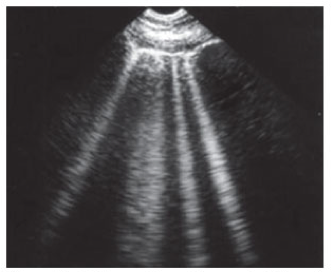
Diagnosis of Acute Cardiogenic Pulmonary Edema (ACPE) with Point-of-Care Ultrasound
Point-of-Care Ultrasonography (POCUS) is a valuable tool in the diagnostic armamentarium of the emergency physician. We have been successfully using it to the place lines, diagnose AAAs and assess the cardiac function of our dyspnea patients for awhile...
Clindamycin versus trimethoprim-sulfamethoxazole for uncomplicated skin infections
Journal Club Summary Methodology Score: 4/5 Usefulness Score: 2/5 Miller LG, et al. N Engl J Med. 2015 Mar 19;372(12):1093-103. Full Article Editorial: Choosing an antibiotic for skin infections. Wessels MR N Engl J Med. 2015 Mar...
Focus on POCUS: Palpitations and Dyspnea Post-AVR
A female in her 20's presents to the emergency department 15 days after major cardiac surgery to repair a congenital aortic valve defect. Her chief complaint is palpitations and shortness of breath, which have been constant and ongoing for the last 4 days. She has no...
Propofol or Ketofol for Procedural Sedation and Analgesia in Emergency Medicine – The POKER Study: A Randomized Double-Blind Clinical Trial
Journal Club Summary Methodology Score: 4/5 Usefulness Score: 3.5/5 Ferguson I, et al. Ann Emerg Med. 2016 Nov;68(5):574-582. Abstract Link This was a large multicenter double-blind RCT to compare ketafol in a 1:1 ratio to propofol failed to find a 10% absolute...

SIRS? No SIRS? Understanding Sepsis in the Emergency Department after Sepsis-3.
Use of the term “sepsis” continues to be controversial. We understand that patients with infection can manifest an immune-mediated systemic response, and are at risk of deterioration, organ dysfunction, and death. At what point in that cascade the patient is termed...
Effect of Hydrocortisone on Development of Shock Among Patients With Severe Sepsis: The HYPRESS Randomized Clinical Trial
Journal Club Summary Methodology Score: 3/5 Usefulness Score: 2.5/5 Keh D, et al. JAMA. 2016 Nov 1;316(17):1775-1785 Abstract Link In this multicenter placebo-controlled double-blind RCT, the authors concluded that in adults with severe sepsis,...