

We are excited to introduce the Sixth edition of The Ottawa Handbook of Emergency Medicine. Your bedside guide for approaches to various Emergency Medicine presentations.
Highlights of the Sixth edition include the addition of: Oncologic emergencies, approach to the pregnant patient, geriatrics and more!

Experiential learning with a TWIST: Ovarian Torsion
I was in the OR for the first day of my anesthesia rotation when suddenly the pain hit me. It was in my left flank, radiating to my back — so much pain I could hardly think. A flurry of tests later, my ultrasound showed good doppler flow, and my lab work was pristine....

Little People, Big Updates: Updates in Pediatric Emergency Medicine
Do you remember when every newborn under 30 days with a fever needed an LP/admission/blood cultures? Well.. times are a little different but its nuanced. The goal of this update is to provide a practical update in pediatric emergency medicine to the average Canadian...

Taking A Dive Into Diverticulitis
You are treating a 43-year-old male with two days of left lower quadrant abdominal pain, a documented fever of 38.4 and malaise. He has no urinary or bowel symptoms. His past medical history is unremarkable. He looks well by ED standards. After a focused history and...
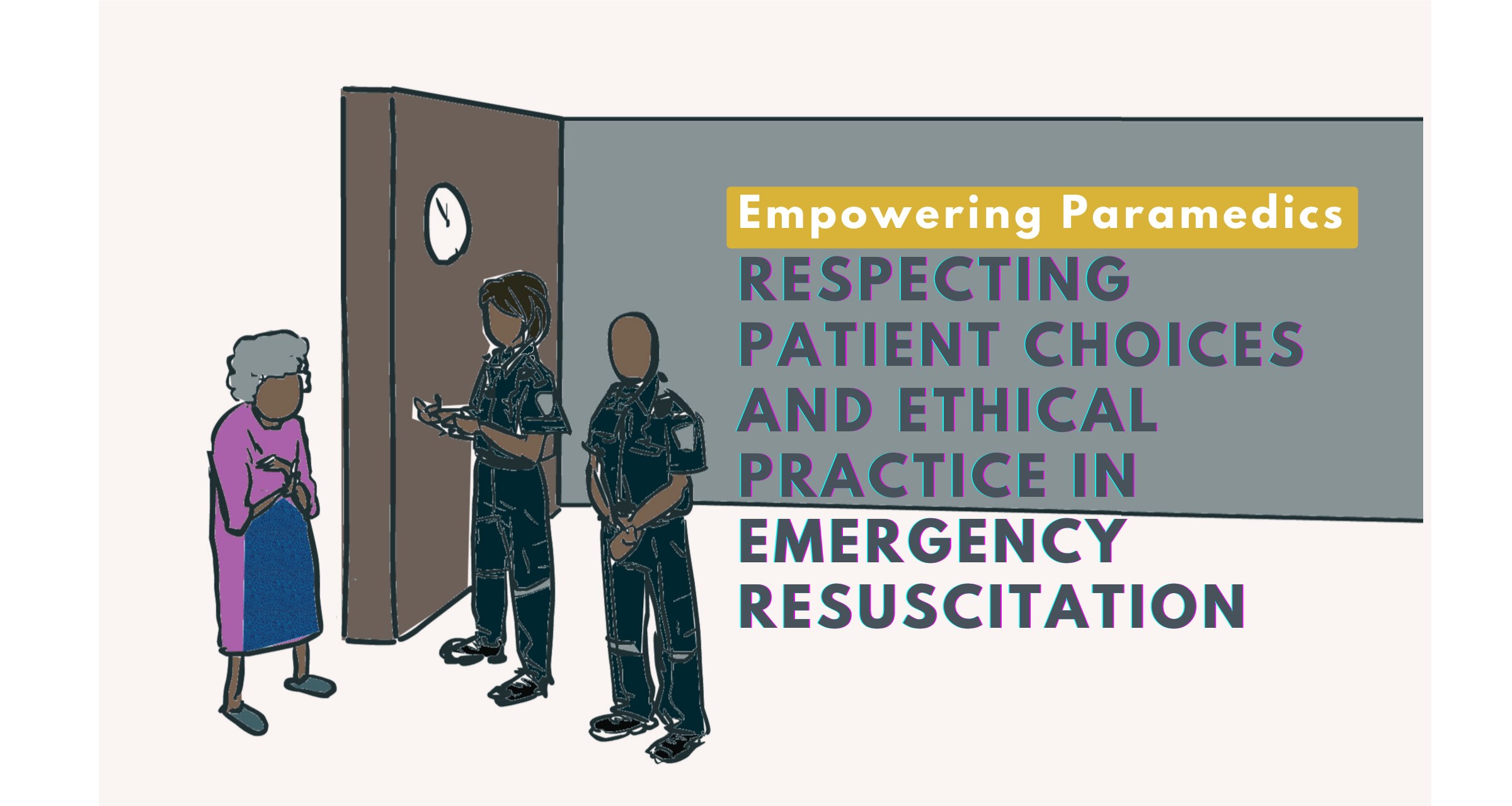
BHP Corner: Respecting Patient Preferences
Emergency medicine is a fast-paced realm where paramedics and medical professionals must make split-second decisions that often mean the difference between life and death. In this high-stakes environment, understanding and respecting patient preferences while...

Traumatic Cardiac Arrests
According to WHO and CDC: more than nine people die every minute from injuries or violence, and 5.8 million people die every year. It is the leading cause of death in people 1-44 years of age in developed countries (unintentional injuries, homicide, suicide). The...

The Donut of Truth (ahh that CT scan)
In Korea where I (hi!) originally trained, because of fewer human resources (like radiologists), and an abundance of technological resources,(like CT and MRI) emergency physicians often are expected to read their own imaging. There are next-day overreads from...

Burnin’ Up: Thermal Burn Pain Management
Dr. Barnes had previously provided a very thorough guide on burns management, which can be found here. The management of thermal injury has largely stayed the same but there have since been some important points that were highlighted by the ABA Pain management...

Drug Rashes
Drug rashes are fairly common, but like much of dermatology, diagnostic clarification can be hard to achieve. Here, we present a standardized approach to drug rashes in the Emergency Department. Differential Diagnosis Clinical Approach ...

BHP Corner: Decision Points in Cardiac Arrest
Case You and your partner arrive at a scene where a 67-year-old male had a witnessed collapse 5 minutes ago and CPR is in progress; he is in cardiac arrest. The initial rhythm is ventricular fibrillation. You continue CPR with a King LT and provide 3 shocks, along...

Testicular Torsion
Acute scrotal pain is a common in emergency departments, comprising ~ 0.5% of all presentations. However, torsion is another very time sensitive diagnosis that is ubiquitous across all ages as seen by this Rosen’s table. Incidence / Epidemiology Unfortunately,...