

We are excited to introduce the Sixth edition of The Ottawa Handbook of Emergency Medicine. Your bedside guide for approaches to various Emergency Medicine presentations.
Highlights of the Sixth edition include the addition of: Oncologic emergencies, approach to the pregnant patient, geriatrics and more!

Patient Safety in the ED
What is patient safety? Patient safety is a discipline developed in response to the rise in hospital adverse events over the years. Aims to take lessons learned from prior unfavourable outcomes and make improvements that mitigate risks, prevent errors, and reduce...

Last Gag with Mary Jane: Cannabinoid Hyperemesis Syndrome (CHS)
With legalization, and increased ease of access to marijuana, there is increased focus on the diagnosis of Cannabinoid Hyperemesis Syndrome, with broader media attention and thus patient awareness to this entity. History: Cannabis (Cannabis sativa spp.) has been...
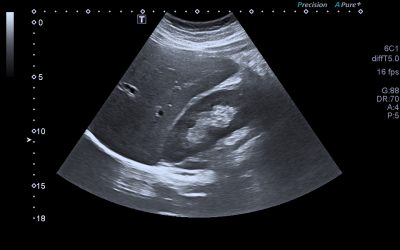
Spontaneous Bacterial Peritonitis in Patients with Cirrhosis
Patients with cirrhosis are complex, with a plethora of comorbidities. They often present to emergency departments (ED) very sick, and there are many complications that emergency physicians need to know about. In this post, we’re going to focus on Spontaneous...
Venous Thromboembolism in Transgender & Gender Diverse (TGD) Persons
You are working an urgent care shift and you access your ED electronic track-board to pick up the next patient waiting to be seen: You assign yourself to patient Smith, and notice a helpful comment from your triage nurse stating the patient's name is Angela. You note...

Surviving Sepsis: The 2021 Review
A review of some of the most relevant elements of the 2021 surviving sepsis campaign for the emergency physician. Definitions Our operative definition of sepsis & septic shock are the sepsis-3 definitions [1]. Sepsis: “Sepsis is a life threatening organ...

Urinary Tract Infection: All your questions answered
How many times a shift do you consider a urinary tract infection? As Emergency physicians, you make and/or consider urinary tract infection (UTI) multiple times per shift.1 Actually, up to 5% of ED visits are related to genitourinary complaints.2-4 From simple...

CAEP 2022: Living Together
Morale amongst Emergency Medicine providers is at a crushing low. If you were to walk through any Emergency Department (ED) or spend 5 minutes on #MedTwitter, this would be abundantly apparent. Slogging through a pandemic, EM providers put their heads down – they put...

Pediatric Resuscitation: AHA PALS Updates
Pediatric cardiac arrests are rare occurrences in Canada Due to the infrequency, pediatric cardiac arrest and resuscitation are challenging areas to study so the data we have is limited in scope and quality. This is an area for future research and improvement...
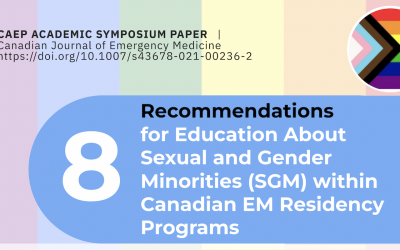
Recommendations for Education about Sexual and Gender Minorities within Canadian Residency Programs
At CAEP 2021, the SLGBTQIA + panel identified perceived or real barriers to the inclusion of sexual and gender minority content in Emergency Medicine residency curriculums. Here, we present an infographic documenting the findings and recommendations from the CAEP...
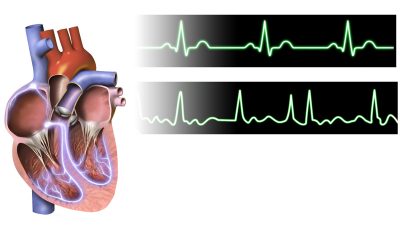
RAFF-3 Trial: A Stepped-Wedge Cluster Randomised Trial to Improve Care of Acute Atrial Fibrillation and Flutter in the Emergency Department
Methodology: 4/5 Usefulness: 5/5 Stiell IG, et al. Can J Cardiol. 2021 Oct;37(10):1569-1577. Question and Methods: Using a stepped wedge cluster randomized trial, does implementation of the CAEP Best Practice Checklist for acute atrial fibrillation and atrial flutter...